Nation · Democratic Republic of Congo
Council of Elders of Kama
The Council of Sages of KAMA (C.SA.K / ASBL) is a non-profit
organization under African law, created to bring together non-governmental
organizations, development associations, human rights defenders,
and discriminated indigenous communities.
A pan-Africanist citizens' movement
We are a pan-Africanist citizens‘ movement working for the mental, spiritual, and social
liberation of Black African peoples. Our platform is based on a mindset rooted in African
cultural and human values, as well as the natural and traditional powers of the Black African
human being.
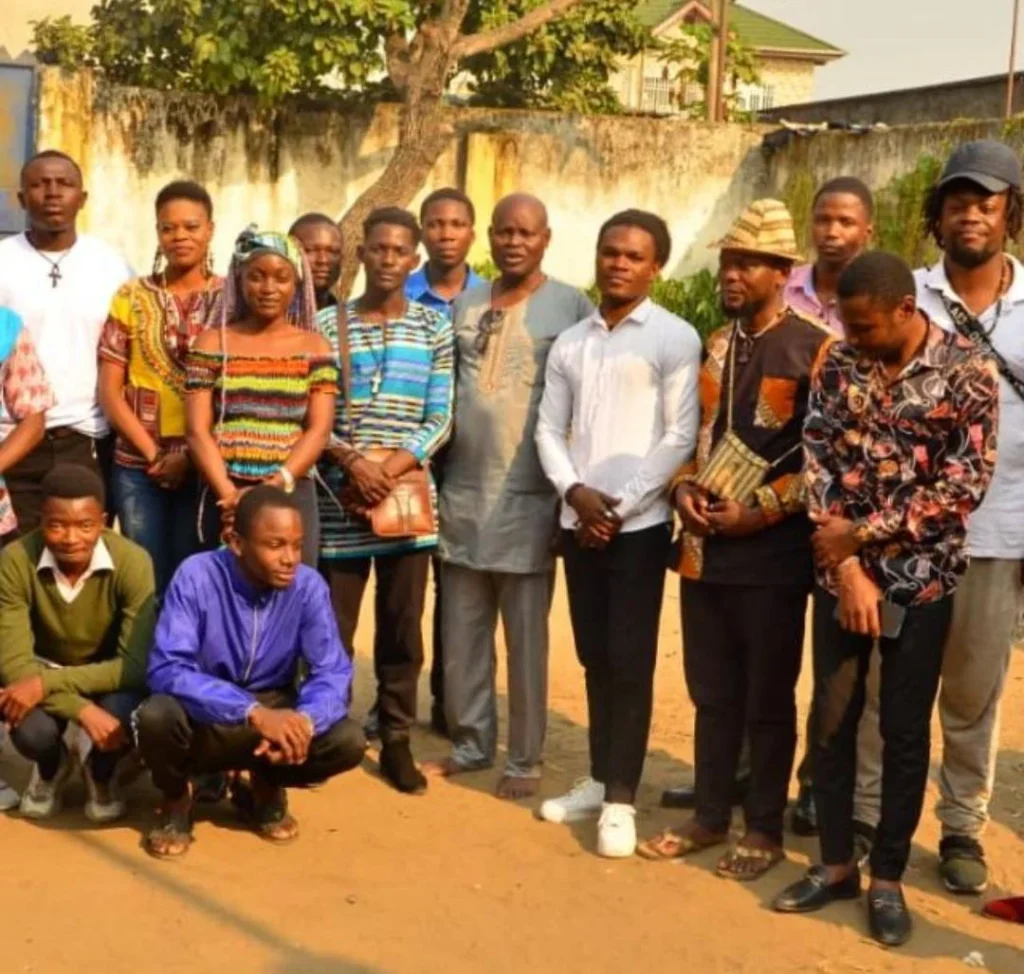
channel, several Indigenous Associations have come into contact with the United Indigenous Nations.
Indigenous peoples linked through C.SA.K
The C.SA.K therefore explicitly includes the indigenous peoples of sub-Saharan Africa in its militant base and in its social purpose.
Movement for the Unification and Progress of Indigenous and Native Peoples
- Cameroon
Union of Indigenous Peoples of Huila
- Angola
Association of Indigenous and Native People of Bongo
- Republic of Congo Brazzaville
Association of Indigenous and Native Peoples of Babongo
- Gabon
Karamojong Indigenous People's Union
- Uganda
Gabonese Association of Indigenous and Native People Mbetty
- Gabon
Union of Indigenous and Native Populations of Kivu and Ituri
- Democratic Republic of Congo
Gabonese Union of Indigenous and Native Teke People
- Gabon
Pygmy Indigenous Peoples' Movement
- Democratic Republic of Congo
Central African Association of Gbaka Indigenous Peoples
- Central African Republic
Communities of Bayaka / Bagandu Indigenous and Native Peoples
- Central African Republic
A product of awareness
We are the product of an awareness of the multidimensional mental, spiritual, social, economic and political domination suffered by the Black African man. Our movement was born to:
- Fight against the mental and spiritual alienation stemming from colonial and post-colonial history.
- Re-anchor Africans in their own ancestral traditions, symbols and rituals.
- Transform Africa’s historical problems into solutions through the reappropriation of its historical experience.
- Accelerate the rise of Pan-African consciousness and the creation of the United States of Africa.
We are also driven by the desire to no longer suffer internal discrimination, impunity, wars, killings, poverty, and social and racial injustice.
Officially created in 2022
The C.SA.K was officially created on September 4, 2022, in accordance with Law No. 004/2001 of July 20, 2001 of the Democratic Republic of Congo relating to non-profit associations.
The founding signatories are pan-Africanist organizations and individuals, including:
- Batwa ba Ntomba ba Mongo (B.N.M.)
- Pygmy Indigenous Peoples‘ Movement (M.P.A.P.)
- Union of Indigenous Peoples of Huila (U.P.I.H.)
- Pan-African New Vision
- Afrocentricity international
- Community Kamite international
- Bana Kama
- Koush kamite Kongo
- RIFDC/ONGD
The CSAK is created for an indefinite period (article 4 of the statutes). It has officially existed since September 4, 2022, which is more than 3 years at the date of the revision of the statutes (November 2025).
Joining the United Indigenous Nations
The C.SA.K Platform officially joined the United Indigenous Nations of Peoples (U.I.N.) on June 28, 2024 in Kinshasa, through the signing of agreements, treaties and acts of recognition between the president of C.SA.K and the representative of the head of the Germanic indigenous communities.
Who or what we are not, legal basis, and challenges
Who ore what ae we not?
- Not a classic political organization – even though it supports pan-Africanist political operators, it is not a political party.
- Not a for-profit structure – it is a non-profit organization.
- Not an entity with an internal discriminatory purpose – it fights against internal discrimination.
- Not a foreign or non-African organization – it is rooted in Africa and thinks about Africa for itself.
- Not a tool of domination or alienation – on the contrary, it aims at mental, spiritual and social liberation.
- Not a structure without discipline – it provides for sanctions, exclusions and respect for the statutes.
- Not an association with a limited duration – its duration is indefinite.
Legal basis
The C.SA.K is based on several explicit legal foundations:
- Law No. 004/2001 of July 20, 2001 (DRC) – general provisions applicable to non-profit associations and public utility establishments.
- The Constitution of the Democratic Republic of Congo in force, in particular its article 37 which guarantees the right of association.
- The present statutes (Titles I to V).
- The internal regulations (adopted by the General Assembly).
- A forthcoming charter (mentioned in article 3 of the statutes) – of a regulatory nature.
- The official documents of the founding member structures.
Thus, the C.SA.K is a legally recognized legal entity in the DRC, with representations in several sub-Saharan African countries, governance bodies (General Assembly and Coordination), a fixed headquarters in Kinshasa (which can be relocated), and the capacity to exert its influence beyond national borders.
The problems of C.SA.K
The main difficulty faced by the Platform for the Defense of Indigenous Peoples (C.SA.K) lies in the discrimination it suffers at the hands of Congolese local authorities. These authorities demand that the organization pay a sum that the indigenous populations are unable to pay.
Although C.SA.K oversees several indigenous associations, it lacks legal status – a prerequisite for accessing carbon credits. While indigenous peoples are officially recognized as one of the main communities called upon to contribute to carbon sequestration, obtaining this legal status and registration in the country’s official gazette would require C.SA.K to pay between US$40,000 and US$50,000.
Unable to pay this sum, the organization has still not obtained legal recognition. Nevertheless, it remains very active in the Democratic Republic of Congo, where it officially operates under a provisional authorization, which does not allow it to become self-financing through access to carbon credits.
Learn more about C.SA.K and its work
their work for the rights of indigenous peoples in sub-Saharan
Africa.