About us · History
Our History
From a single initiative in 1999 to a supranational alliance of Indigenous nations – the
history of the U.I.N. is a story of return, recognition and steady growth.
How it began
As early as 1999, the founder and head of Indigenen Volkes Germaniten (IVG), Ulrike Maria Kuklinski, began developing ring provision – an instrument that operates outside the state system, but is not directed against it, to support people in complicated life situations.
Bit by bit, she realised that there was only one way to break free and act humanely: indigenity – a return to one’s roots, one’s humanity, one’s people. After another intermediate step, this led to the founding of IVG in 2010.
Milestones
The steps that led to the founding of the U.I.N.
- 1999
Ring provision developed
Ulrike Maria Kuklinski begins developing an instrument to support people in complicated life situations – outside the state system.
- 2010
Founding of IVG
The Indigene Volk Germaniten (IVG) is founded as the organisational base.
- 2016 – 2017
The realisation of international necessity
It becomes clear that international, even global contacts are essential to constitute an Indigenous people or nation – one criterion being recognition by at least one other Indigenous people.
- 2022
The project gains momentum
After a period in which the project took a back seat, the idea regains momentum – a new quality of merger is needed.
- December 2023
First international treaty
The Indigene Volk Germaniten signs its first international treaty with another Indigenous nation – a milestone that marks the beginning of an unstoppable process.
- January 2024
Joining the AIN
The IVG joins the Alliance of Indigenous Nations (AIN) – a decisive step toward international networking with other Indigenous peoples and nations.
- 17 July 2024
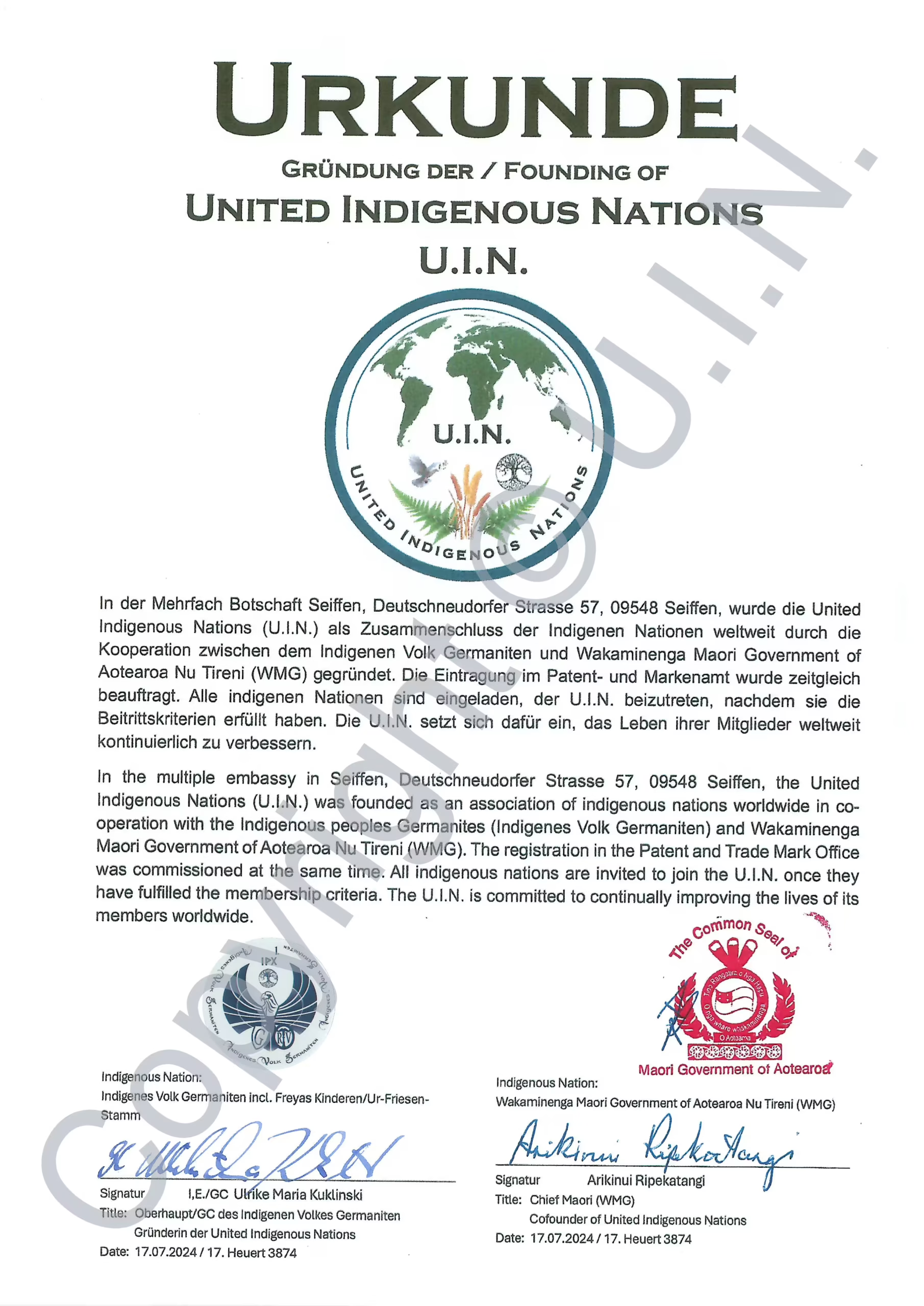
Founding of the U.I.N.
The United Indigenous Nations is founded by its initial negotiation partners, together with the Wakaminenga Māori Government of Aotearoa Nu Tireni, the Republic of Lakota Nations, the Kinakwii and the Union Autochtone Batwa.
- 2024 – today
Steady growth
New members join at a steady pace, accompanied by friendship and ambassadorial agreements.
The Founding Document
partners on 17 July 2024.
The story continues
In the meantime, the logo has been protected, new members are joining at a steady pace, without haste, and are now reaching the size of a supranational organization, with more and more joining in the process.
Meanwhile, the number of members of our U.I.N. is growing steadily, and these new memberships are accompanied by friendship and ambassadorial agreements that are gradually being brought to life. The number of members is very important and is increasing, and this is naturally accompanied by an improvement in quality, e.g., in the area of economic cooperation.
In addition to economic cooperation, great attention is naturally also being paid to other areas. Diplomatic relations between nations, active solidarity, and cultural exchange.
A great deal is currently being done in the area of international visibility for our U.I.N. in order to place the necessary emphasis on indigenous peoples and to ensure that we are recognized, perceived, and, above all, respected as an enrichment to coexistence.
The history of the U.I.N. is far from over – it continues daily and unstoppably.
Milestones at a glance
1999
Ring provision
2010
Founding of IVG
2016 – 2017
International realisation
2022
New momentum
Dec 2023
First treaty
Jan 2024
Joining the AIN
17 July 2024
Founding of U.I.N.
At a glance
More about us
Legal foundation
The U.I.N. operates in accordance with UNDRIP, ILO 169, ICERD, UNCRC, FPIC and CAT. View documents.