Our Structure
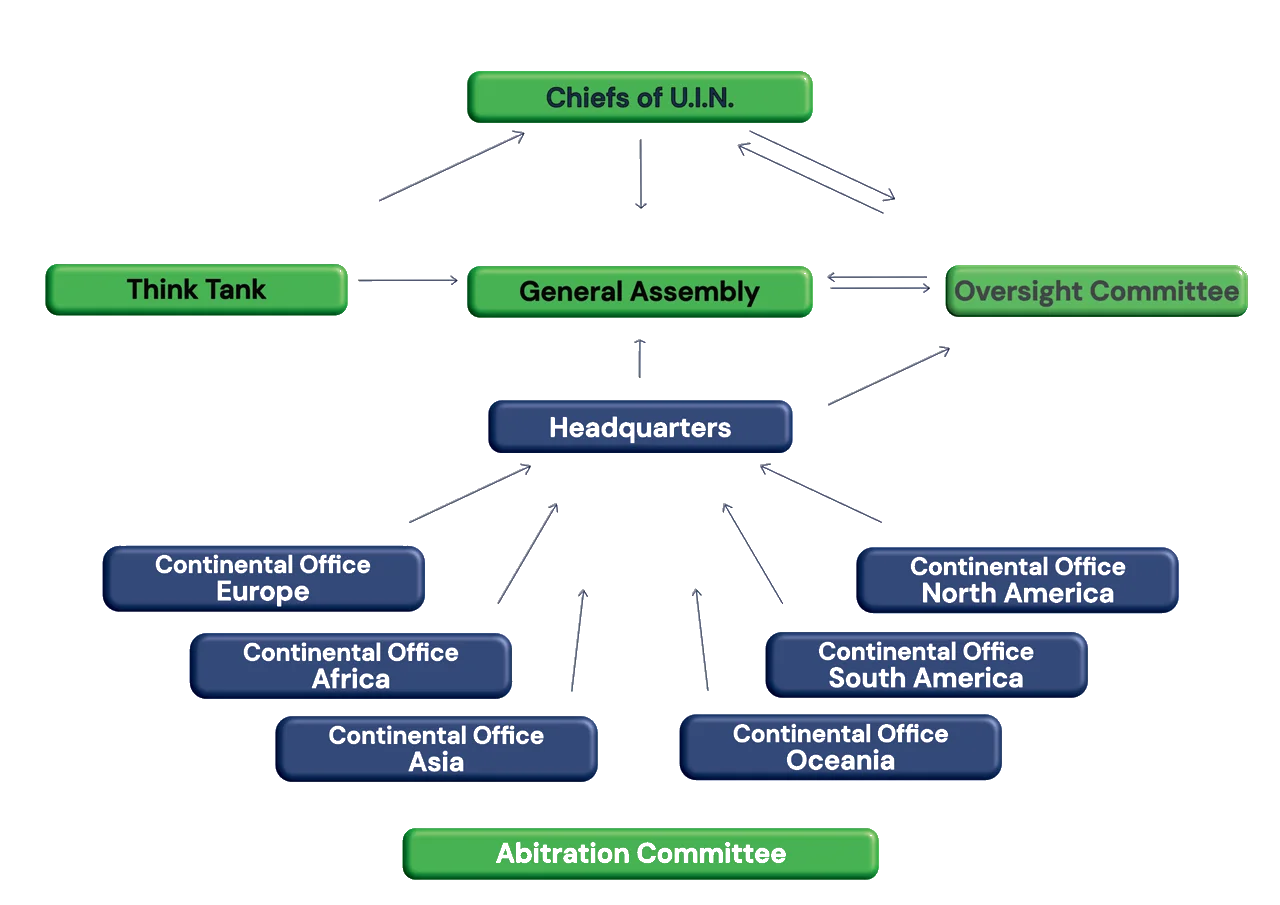
The Structure of the U.I.N.
The U.I.N.–Agreement forms the foundation of the organization. It defines the fundamental principles and objectives that guide the direction and actions of the United Indigenous Nations. By signing the agreement, members commit to actively implementing these principles.
The Chiefs of U.I.N. are the highest representative authority and the external voice of the U.I.N. In fulfilling their duties, they act in accordance with the purposes and policies of the U.I.N..
The General Assembly provides a platform for all members to exchange and discuss their perspectives on various topics. It approves the financial budget, appoints members to various committees, makes recommendations, and acts as the highest authority within the U.I.N.
The Think Tank of the U.I.N. develops new programs, strategic goals, and creates concepts for implementation.
The Oversight Committee is responsible for ensuring compliance with the U.I.N.’s resolutions, policies, projects, and decisions.
It serves as the organization’s main oversight body.
The Headquarters is the central point of contact, the operational heart of the U.I.N. and is responsible for the implementation of decisions, ideas, and concepts. The headquarters houses for example, the diplomatic service, administration and the indigenous jurisdiction.
The Continental Offices are the contact point for all matters concerning their respective continents and also serve as the interface with headquarters.
The Abitration Committee is the principal judicial body of the U.I.N.. — an indigenous jurisdiction.